I'm generally not a big fan of day trips. Whether you're at a resort or renting a house, I find myself thinking: we came all this way for a place. How many other places do I have to jam into the trip to make it valuable? My answer is usually no more than one.
Expectations on day trips are also relatively low, especially with kids. It's not like we can go to museums or see the sites. We're limited in what you can actually accomplish.
So I say all that to say: I was blown away by Ronda. Single-handedly one of the most beautiful places I've ever been.
That said, we didn't approach it in the typical way. We arrived mid-morning, and our first stop was down into the valley. Usually people head straight up to the bridge. But we'd heard that the best place to see it is deep in the valley beneath it.
So we hiked down. Good reminder to anyone considering a hike that starts going downhill: those are the ones that bite you. You forget that at the end, you also have to hike back up.
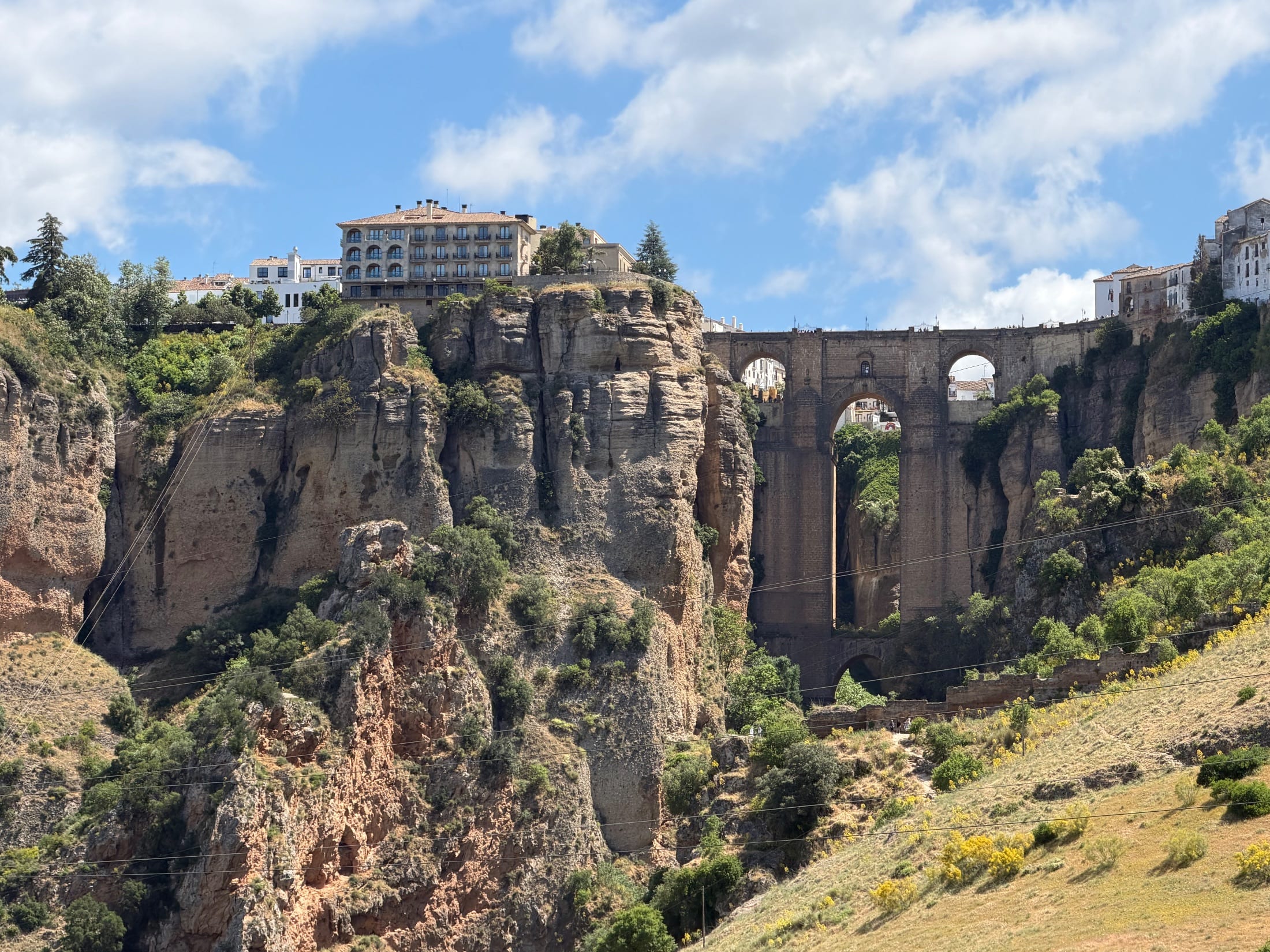
We got down and, yep, as expected, gorgeous. You can see the whole valley and the stunning ancient bridge above.
The Puente Nuevo was completed in 1793 after 34 years of construction, replacing an earlier bridge that had collapsed in 1741 and killed fifty people. It rises 98 metres above the Guadalevín River, spanning the El Tajo gorge that splits Ronda in two. A chamber inside its central arch was used as a prison, and during the Spanish Civil War captives were allegedly thrown from it onto the rocks below; Hemingway fictionalised the scene in For Whom the Bell Tolls.
Before we turned back up, though, we saw a little sign. Barely a sign, more like a signpost. Pointing to a winery. Down the hill.
We looked down the hill and saw nothing. There is nothing in this valley. Vegetation, farms, but nothing that resembles a winery.
But when you find a sign, you follow it.
So we headed further into the valley, and before long we stumbled upon a small patch of vines. And in the middle of that patch, a couple of stone houses. Samsara Winery.
Samsara is the project of two friends, Pablo Chacón and Juanma, who took on a pair of small family vineyards in 2009 and farm them organically and biodynamically. They have no proper winery building yet; the grapes are crushed and fermented nearby. But they have four-and-a-half hectares of vines at the foot of El Tajo, hand-harvested at night, and a stubborn commitment to natural winemaking. "Samsara" is Sanskrit for the circle of life.
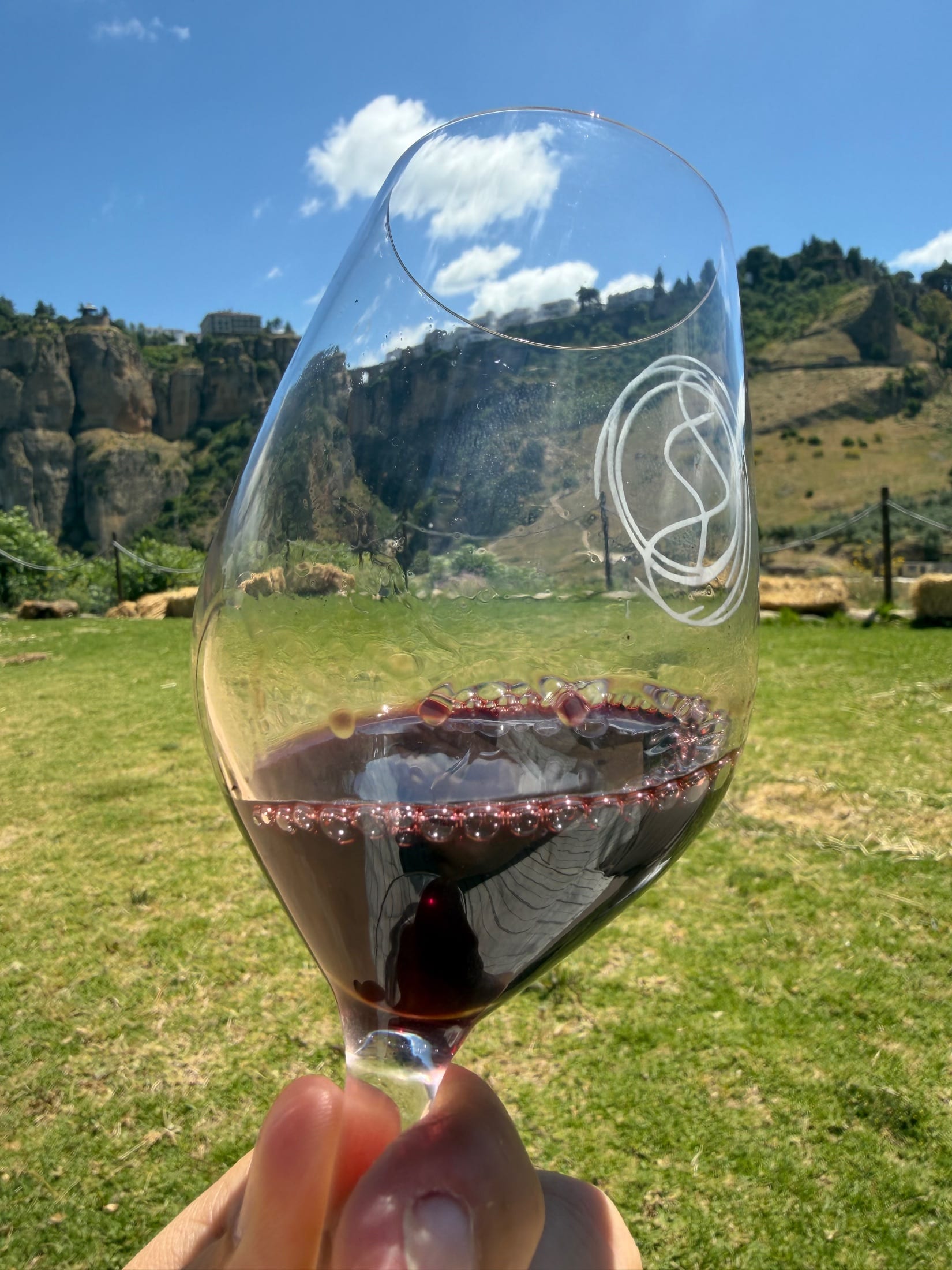
On arrival, Pablo waved us in and offered us either a tour of his (meagre) winery, or the opportunity to sit amongst the vines with a bottle of his latest wine. Sit, we did.
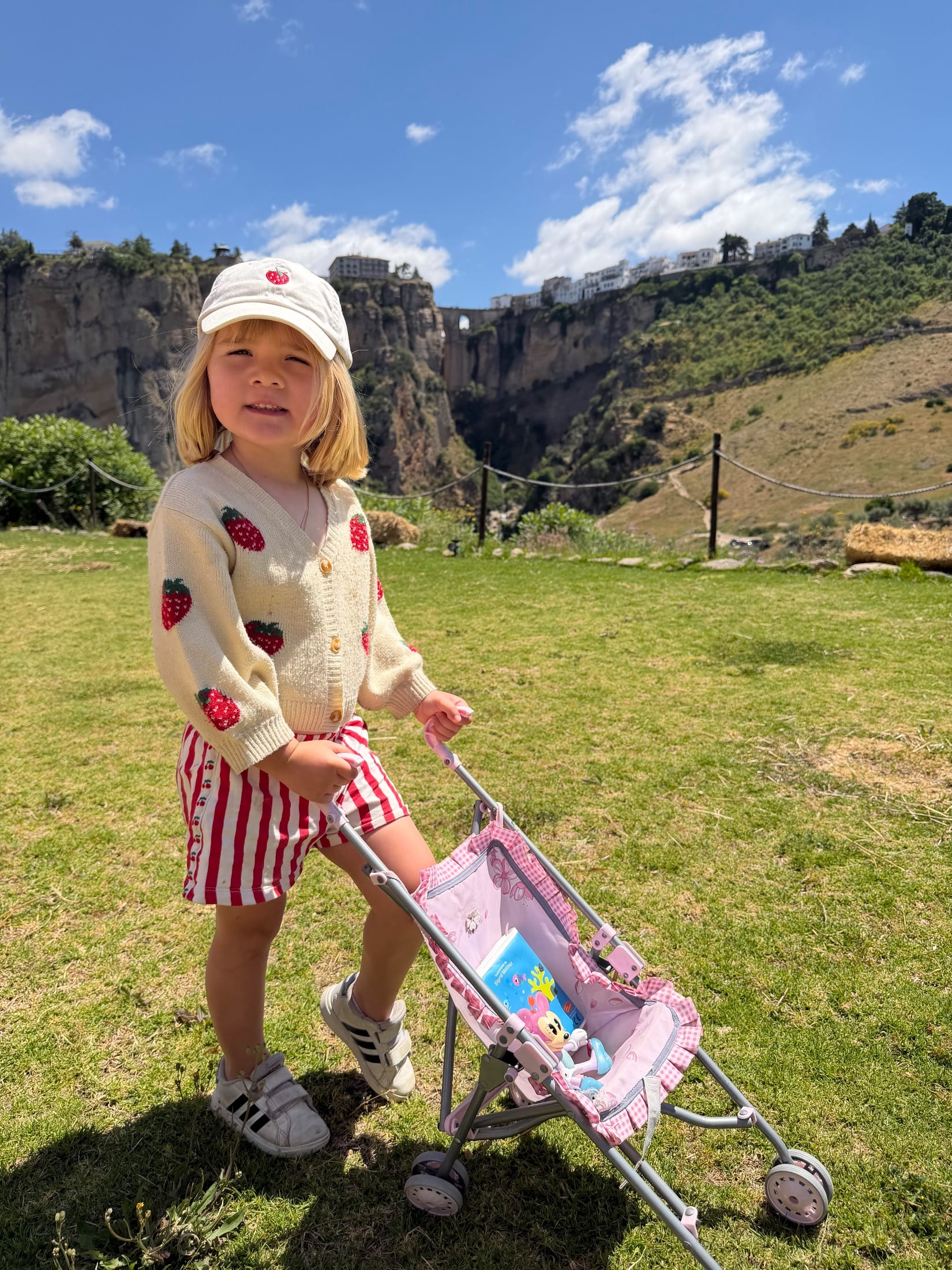
We were in the valley, overlooking the bridge, sipping on local wine, which, aside, was brilliant, while the kids played with a set of toys he kept for visiting children. No one else was there.
In contrast, an hour later, when we made our way up to the bridge itself, it was packed with tourists.
This was one of those hidden gems that literally couldn't have been found. I looked it up later, trying to figure out if we had just missed the memo, and I couldn't find anything good. No must-see articles. No obvious posts pointing in its direction.
But sometimes you stumble upon something great. And when you do, you say yes to Pablo, and you drink wine.